
A Wonderful Day in Nanjing
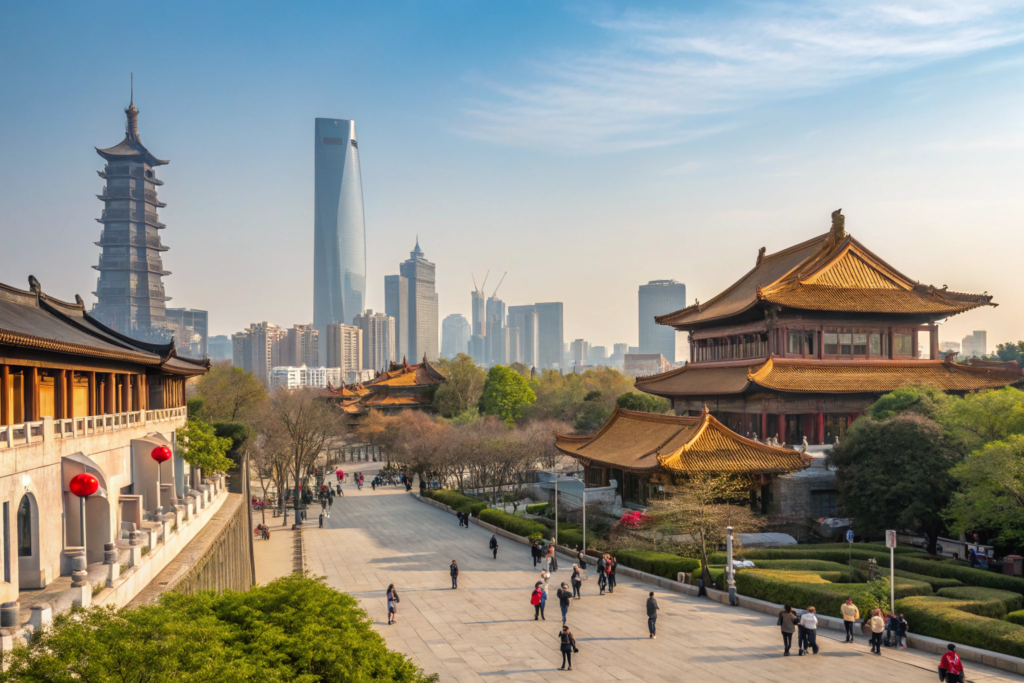
A Wonderful Day in Nanjing
Nanjing, a city where history whispers from ancient walls and modernity soars in gleaming towers, offers a journey through time and culture. To spend a day here is to weave through dynasties, revolutions, and rejuvenation, all within the span of sunrise to starlight. This narrative details an immersive, perfect day in the capital of Jiangsu province, exploring its iconic landmarks, hidden gems, culinary delights, and vibrant nightlife, aiming to capture the essence of this profound and dynamic city.
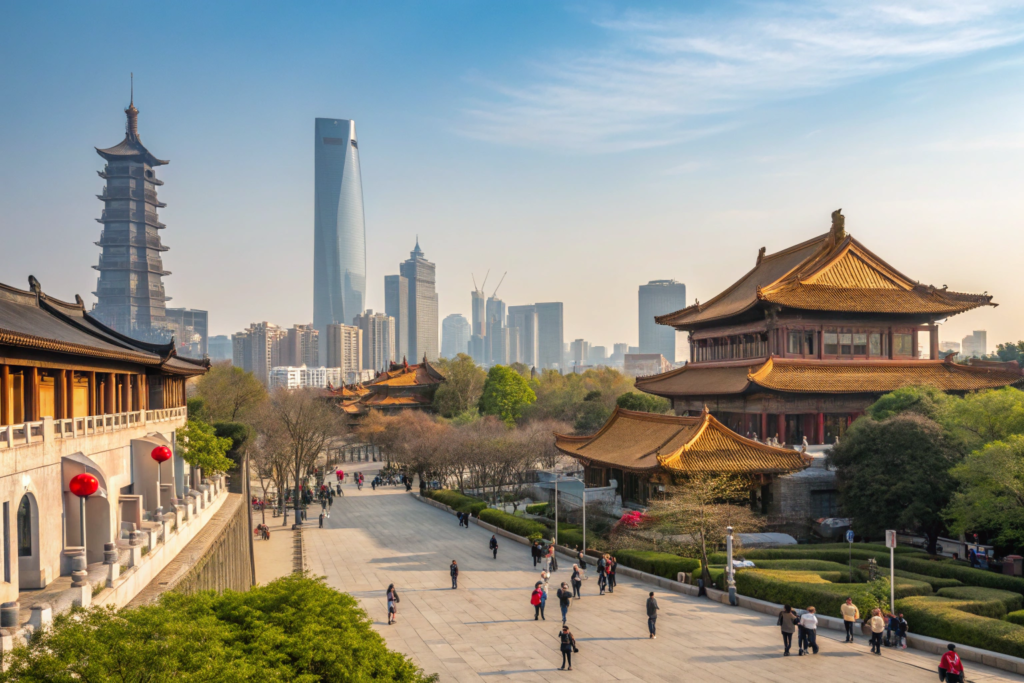
I. Dawn’s Embrace: Morning Serenity at the City’s Historic Heart
The day begins before the sun has fully claimed the sky. The air is cool, carrying a slight mist from the nearby Yangtze River. The objective for the early hours is to connect with Nanjing’s soul—its deep, often solemn history—in tranquility.
**Sun Yat-sen Mausoleum at First Light**
The journey starts at the foot of the Purple Mountain (Zijin Shan). A brisk walk up the grand, tree-lined avenue leads to the awe-inspiring Sun Yat-sen Mausoleum. At this hour, the massive memorial is shrouded in a serene, blue-hued quiet, free from the daytime crowds. The 392 steps seem less an ascent and more a pilgrimage. Dr. Sun Yat-sen, the founding father of modern China, rests here, and the architecture—a blend of traditional Chinese and modern styles—symbolizes his pivotal role. Reaching the top as the first golden rays of sun break over the mountain ridge is a moment of pure magic. The panoramic view of Nanjing waking up, with the mist clinging to the forests and the city skyline faint in the distance, is a powerful, silent testament to the past looking over the present.
**The Sacred Path of the Ming Xiaoling Mausoleum**
Descending, a short walk leads to the Ming Xiaoling Mausoleum, the tomb of the Hongwu Emperor, founder of the Ming Dynasty. While the tomb itself is impressive, the true morning treasure is the “Spirit Way” (Shen Dao). This ancient path is guarded by majestic, centuries-old stone statues of mythical beasts, generals, and court officials. Walking this path in the soft morning light, with birdsong as the only soundtrack, feels like stepping directly into the 14th century. The sculptures, worn by time but still imposing, seem to breathe with stories of imperial power and eternity. It’s a place for contemplation, where one can almost hear the echoes of imperial processions.
**Breakfast in a Hutong: The Taste of Local Life**
By now, the stomach yearns for sustenance. Leaving the mountain, a taxi ride leads to a preserved *hutong* (old alleyway) near the Confucius Temple area. Here, life is stirring. Locals queue at small, steamy storefronts. The breakfast is a simple yet unforgettable feast: a bowl of savory duck blood and vermicelli soup (*ya xie fen si tang*), its rich, peppery broth both warming and invigorating. Alongside, a freshly baked *shaobing* (sesame-seed crusted flatbread) wrapped around a crispy youtiao (deep-fried dough stick) provides the perfect textural contrast. Washed down with a cup of sweet, warm soy milk, this meal is not just food; it’s an initiation into the daily rhythm of Nanjing.
## II. Imperial Legacies and Literary Echoes: A Mid-Morning to Afternoon Exploration
Refreshed and nourished, the next phase of the day delves deeper into Nanjing’s identity as a former imperial capital and a center of Chinese literature and learning.
**The Majesty of the Nanjing City Wall**
Nanjing boasts the longest surviving ancient city walls in the world. The section near the Jiming Temple or the Zhonghua Gate (Gate of China) offers a magnificent walk. Climbing onto the broad, 14th-century wall, one is struck by its sheer scale—wide enough for five horses to run abreast. Walking along its length provides a unique perspective: on one side, the serene expanse of Xuanwu Lake or the quaint old rooftops; on the other, the pulsating, modern city. The Zhonghua Gate itself is a fortress within a fortress, a complex castle with multiple arches and vaults designed to confound invaders. Exploring its hidden chambers and tunnels is like unraveling a historical puzzle, a tangible connection to the city’s formidable defensive past.
**The Poetic Calm of the Confucius Temple and Qinhuai River**
A short journey south leads to the bustling Confucius Temple (Fuzimiao) area. While the temple itself, dedicated to the great sage, is a serene complex of halls and courtyards worthy of quiet respect, the surrounding district along the Qinhuai River is a vibrant tapestry of Jiangnan culture. By late morning, it’s lively. The architecture is classic Ming and Qing dynasty style, with white walls, black tiles, and upturned eaves. A must-do is a boat ride on the Qinhuai River. Gliding along the calm, green waters under ancient stone bridges, past restored merchant houses and gardens, one can imagine the area’s heyday during the Ming Dynasty, when it was a hub for scholars, poets, and entertainers. It’s easy to picture the romantic scenes described in classic Chinese literature unfolding along these very banks.
**A Literary Pilgrimage: The Presidential Palace and Its Layers**
The afternoon begins at the Nanjing Presidential Palace. This site is a remarkable palimpsest of Chinese modern history. It served as the headquarters of the Taiping Heavenly Kingdom in the 19th century, the office of Sun Yat-sen as Provisional President in 1912, and later the presidential palace of the Republic of China. Wandering through its extensive grounds is a walk through different eras. One moves from elegant classical Chinese gardens with pavilions and rockeries to solemn Western-style administrative buildings. The hall where Sun Yat-sen took his oath of office holds a palpable gravity. The juxtaposition of architectural styles perfectly mirrors Nanjing’s—and China’s—complex journey through feudalism, rebellion, republicanism, and war.
## III. Culinary Immersion and Urban Pulse: Late Afternoon Delights
As the afternoon sun begins to mellow, the focus shifts to Nanjing’s celebrated culinary scene and its modern urban vitality.
**The Legend of Nanjing Salted Duck**
No day in Nanjing is complete without tasting its most famous culinary export: *Nanjing yanshui ya* (Nanjing salted duck). For an authentic experience, a visit to a time-honored restaurant or a popular market stall is essential. The duck, with its shiny, amber-colored skin and tender, flavorful meat, is a masterpiece of simplicity. The taste is savory, slightly salty, and incredibly fragrant, without the heaviness of other duck preparations. Enjoying a plate, perhaps with a side of steamed buns and pickled vegetables, is to taste a piece of Nanjing’s gastronomic soul—a recipe perfected over centuries.
**Exploring the Xinjiekou Commercial District**
To experience the city’s contemporary heartbeat, one heads to Xinjiekou, the central commercial hub. Here, towering skyscrapers, including the iconic Zifeng Tower (Nanjing Greenland Financial Center), scrape the sky. The area is a whirl of shopping malls, luxury boutiques, and neon signs. A visit to the observation deck of one of the towers is highly recommended. As the late afternoon light casts long shadows, the view is breathtaking. The vast city unfolds below, with the serpentine Yangtze River visible in the distance, the Purple Mountain a green monolith to the east, and the ancient city wall snaking through the urban fabric like a stony seam binding past and present.
**A Moment of Peace: Xuanwu Lake at Dusk**
To transition from the day’s fervor to the evening’s calm, Xuanwu Lake provides the perfect sanctuary. This enormous lake, with its five islets connected by causeways, is a favorite among locals for evening strolls. Renting a bicycle or simply walking along the willow-lined paths as the sun begins to set is a sublime experience. The sky transforms into a canvas of oranges, pinks, and purples, reflected in the vast, placid waters of the lake. The silhouettes of the city wall and the distant skyscrapers create a stunning, harmonious contrast. It’s a moment of quiet reflection on the day’s journeys—from imperial tombs to bustling streets—all contained within this one, multifaceted city.
## IV. Illuminated History and Riverside Revelry: The Nanjing Night
As darkness falls, Nanjing dons a different, equally captivating cloak. The city’s landmarks are illuminated, and its vibrant nightlife awakens.
**The Night Market Feast on Shiziqiao**
Dinner is an adventure at the Shiziqiao (Lion Bridge) or another local night market. Under strings of bare bulbs, stalls sizzle, steam, and smoke, offering a dizzying array of street food. The air is thick with enticing aromas. This is the time to be bold: try *stinky tofu* with its formidable scent but delicious taste, savor spicy crayfish (*malaxia*), or indulge in glutinous rice balls stuffed with sweet red bean paste. Jostling with locals, pointing at unfamiliar dishes, and sharing tables with strangers is an exhilarating, deeply authentic cultural experience.
**A Stroll Along the Glimmering Qinhuai**
Returning to the Confucius Temple area at night is to see it reborn. The ancient buildings and bridges are outlined in golden lights, their reflections dancing on the inky waters of the Qinhuai River. The crowds are festive, the atmosphere lively yet steeped in nostalgia. It feels like a scene from a classical Chinese painting brought to vivid, colorful life. A nighttime boat ride here offers a completely different, arguably more romantic, perspective than the daytime journey.
**The Yangtze River Bridge: A Symbol in Spotlight**
To cap the night, a final visit to the Nanjing Yangtze River Bridge is in order. This dual-purpose road-rail bridge, a symbol of Chinese self-reliance and engineering prowess built in the 1960s, is spectacularly lit at night. Walking along its pedestrian path, high above the mighty Yangtze, with the dark, powerful river flowing silently below and the sparkling lights of the city stretching to the horizon, is a humbling and awe-inspiring experience. The wind carries the hum of the city and the occasional whistle of a train on the lower deck. It stands as a powerful monument to the 20th century, a fitting counterpoint to the morning’s visit to the Ming-era monuments.
## Conclusion
A single day in Nanjing is necessarily a tasting menu, yet it leaves an indelible impression of a city of profound depth and resilient spirit. From the solemn dawn ascent to Sun Yat-sen’s tomb to the glittering night walk on the Yangtze Bridge, the journey traverses the full spectrum of China’s narrative. Nanjing does not hide its scars—its history as a capital of triumphs and tragedies is etched into its stones and memorials—but it wears them with dignity, weaving them into a vibrant, forward-looking present. It is a city where one can touch the cold stone of a 600-year-old statue in the morning and feel the pulse of a modern metropolis by evening; where the taste of centuries-old recipes lingers alongside the energy of innovation. A day in Nanjing is more than sightseeing; it is a dialogue with time itself, leaving the visitor with a sense of connection to the enduring flow of history, culture, and human endeavor that this majestic city so gracefully embodies. It is, without a doubt, a wonderfully rich and complete experience, a day that resonates long after one has left its ancient walls behind.